Thank you for your feedback. In response to your summary. In essence it paints an accurate picture, however, there are a few caveats.
1. The older one gets into the phonetics and phonology of Coptic language, the harder one knows exactly how a word or a letter sounded. So, this is hypothetical rather than factual. It does not invalidate it though, but, one would be open to the conversation regarding such pronunciation possible variants. For 2 & 3, I have nothing to comment.
With respect to your question why can't we stick with y to match with Church's pronunciation and the manuscript's literal pronunciation?
Linguistics is a descriptive field rather than prescriptive. In a sense, the field would offer information about language, but it does not recommend abiding by it or not. This is a question of values, priorities etc.
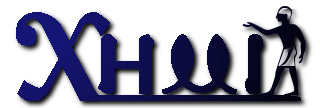
Some people would value what they believe to be the most authentic the best documented in each case, even if this makes them unpopular and creates animosities, or results in schisms in the field. For them, truth is the ultimate value so, if more manuscripts point out that ⲭⲏⲙⲓ sounded like Kami or Kame they would abide by that.
Some people value conformity and being in a group, so, if the church pronunciation is the most common, then they will follow through to minimise friction, and unify work in the field even at the expense of accuracy or truth.
I would not judge of fault anyone for making an active choice in the field. I guess a previous generation was more confrontational in an either/or manner, however, I think phonetics is much more diverse and complicated to put under one banner. The main issue in both camps is followers who are more royal than the King and who are ready to fight without examining the evidence.
I think what Old Bohairic pronunciation provides is a coherent attested system of pronunciation, in that sense it might be out of place to use an infrequent variant of pronunciation just because it appeared a few times. This does not make kimi invalid.
For Church's pronunciation, it is by definition the del facto used pronunciation within the church (with some variations), so if one is mainly keen to be a deacon, singing in the church, it could be a choice for them, albeit at the expense of accuracy.
I think these are two contrasting images, depicted for clarity, in reality there are overlaps between both pronunciations in ⲍ,ⲕ,ⲗ,ⲙ,ⲛ,ⲝ,ⲣ,ⲭ,ⲯ,ⲱ,ϣ,ϧ are more or less similar, and there is a spectrum between both camps.